Kate Lorenz was first, for me, a friend. I imagine many folks felt the same way. Her easy smile and openness made her friends of many. We met at a gig for her band Rusty Belle in Amherst a dozen years or more ago. That meeting led to a friendship which renewed itself every time we connected over these may years. Kate became a programmer at our station, Valley Free Radio, spinning her favorite Classic Rock B-Sides on the Vinyl Countdown. I was honored to sit in on that program over the years when she needed to perform in her many bands or to see her beloved Bruce Springsteen in concert. It was during this time that Kate released her first solo album, “Sing When Lonely” and I convinced her to join me on my show for an in-studio chat and performance. This audio is pulled from that show. Kate sings three tunes live in-studio including the title cut, “Sing When Lonely”, “Slide Tackle into your Heart”, and “Yard Sale”. We also hear her singing with Chris Smither on his “Leave The Light On” from “Still on the Levee” along with her dedication of her song, “Dive Bar”.
It was a difficult segment for me to produce in light of her tragic early passing but listening to her laugh and her voice was proof that it captured her “sparkly” essence. I’ll always remember her last month when we saw each other at a music event. She was radiant at the outdoor show chasing after her three year old Pearl; both of them squealing with joy!! That’s how I’ll remember this jewel of a woman. I won’t be alone!
Caitlin Canty joined Nine Volt Heart to chat about her musical journey from Proctor Vermont to Nashville Tennessee. Along the way, she chronicles time at Williams College and New York City. Of course, we talk song writing and her album releases including a pending one with a stellar cast of Nashville A-Listers. The purpose of our chat is to preview her show scheduled for Saturday 8/20 as part of the Green Mountain Bluegrass and Roots Festival in Manchester Vermont. All of the Nashville “neighbors” that make up the core band will also be at Green Mountain including Brittany Haas (fiddler for Hawktail) Sarah Jarosz on mandolin, Andrew Marlin (Watchhouse), Noam Pikelny (banjo) and Chris Eldridge (guitar and producer) from Punch Brothers along with Paul Kowert (bass for Hawktail and Punch Brothers). I’m really looking forward to some of these special guests collaborating on Caitlin’s set!
We include songs from Caitlin’s career like “Get Up”, “Take Me For a Ride”, “Enough About Hard Times”, “Scattershot” and “Where Is the Heart of My Country”. Our chat covers lots of topics along the way including her collaborations with Darlingside, her work on the TV show “Live at the Lion’s Den” and the bands that populate her latest albums. Of course, we preview her upcoming set at Manchester Vermont’s Green Mountain Bluegrass and Roots Festival, August 19-21. Check out the entire schedule at greenmountainbluegrass.com
Dan Tyminski is a fourteen time Grammy winner, four time IBMA Male Vocalist of the Year, and despite all that; a humble and genuine guy. Starting with the Lonesome River Band, he was recruited by Alison Krauss to join Union Station in the early 90’s. Strings of hits and sold out venues followed as one of the most successful acts in all music regardless of genre. He’s been busy hitting the bluegrass festival circuit with a new album under the Dan Tyminski Band. He just released a tribute to Tony Rice called “One More Time Before You Go”.
We begin our discussion with some of his memories of his involvement in the Coen Brother’s film, “Oh Brother, Where Art Thou?” Dan is the dubbed voice of actor George Clooney in this award-winning film and soundtrack. Our topics include his recently finished Dan Tyminski Band album, his time with Union Station, his “festival kid” beginnings and more.
Along the way we hear “Church Street Blues” with Molly Tuttle, Dan’s classic take on “Man of Constant Sorrow” from the film, Alison Krauss and Union Station’s “Choctaw Hayride”, Dan’s version of “Ten Degrees and Getting Colder” with Dailey and Vincent. We finish the segment with Union Station’s take on Peter Rowan’s “Dust Bowl Children” and his just released title cut from “One More Time Before You Go”.
It was a real pleasure talking with an artist who acknowledges his success while staying “real” and approachable. Give the audio a listen. It’s a nice glimpse into Dan’s approach to music and life.
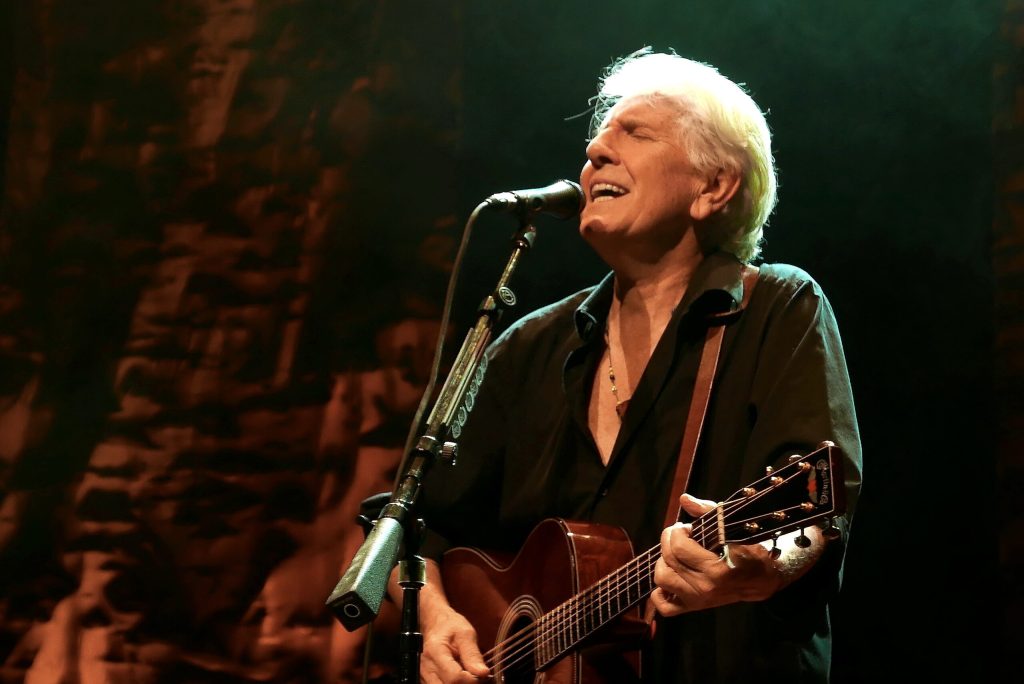
It was an honor to chat with Graham Nash this week on NineVoltHeart. He has a number of New England dates coming up including Hartford’s Infinity on 7/14, Great Barrington’s Mahaiwe Theater on 7/23 , Lowell’s Boarding House series on 8/4 in addition to sold out shows in Old Saybrook, Nantucket, and the Treehouse Brewery in South Deerfield. He’ll be doing a career retrospective from the Hollies catalog to songs written yesterday! Our conversation covers his upcoming tour, new album plans, his band for these shows and much more. We talk about his songwriting process, political and social commentary as fodder for songs, and his love of harmony singing. We also discuss his life-long love for photography culminating in “Life In Focus; the Photography of Graham Nash”.
Throughout we hear Graham’s amazing songs including “Simple Man”,”Fieldworker”,”Cathedral”,”Prison Song”,”Myself At Last”, “Military Madness”, “Find The Cost of Freedom” and more.
Willi Carlisle’s “Peculiar, Missouri” will be fully released in mid-July but we heard two of the three singles released on today’s show. We also talked about a myriad of things from punk to poetry, gay cowboy icons to masks and puppet theater. Along the way, we touched on pivotal events in Willi’s life including heading to the Ozarks to teach poetry, his discovery of square dancing, an intentional community called Meadowcreek, and we talked songwriting of course. Willi’s songs have stuck with me since I first heard him at 2021 Freshgrass Festival. His latest release confirms Willi’s claim that “folk music allows him to be as weird as wants to be” but listeners will hear the insanely clever turn of the phrase and imagery that remains long after the last note. We hear “Tulsa’s Last Magician” to open the segment and Willi dedicates the song to the many folks whose jobs and vocations are being phased out and replaced. “What the Rocks Don’t Know” from “To Tell You the Truth” is a spoken blues about many topics including Walmart, Conoco stations and “finding Jesus in a barbeque line”. The Ozarks that Willi has called home gets a reference in “Folk Art Masterpiece” and we finish with a dramatic personal song called “Life on the Fence”; a song about the difficulties of being a male bisexual in our culture. Willi Carlisle’s songs are personal yet universal; he just wants to love everybody. He’s a literate redneck with a heart. He always speaks his truth to anyone ready to listen. One of the most riveting and unique performers I’ve seen in many a year. Peculiar? Perhaps. But never Misery.
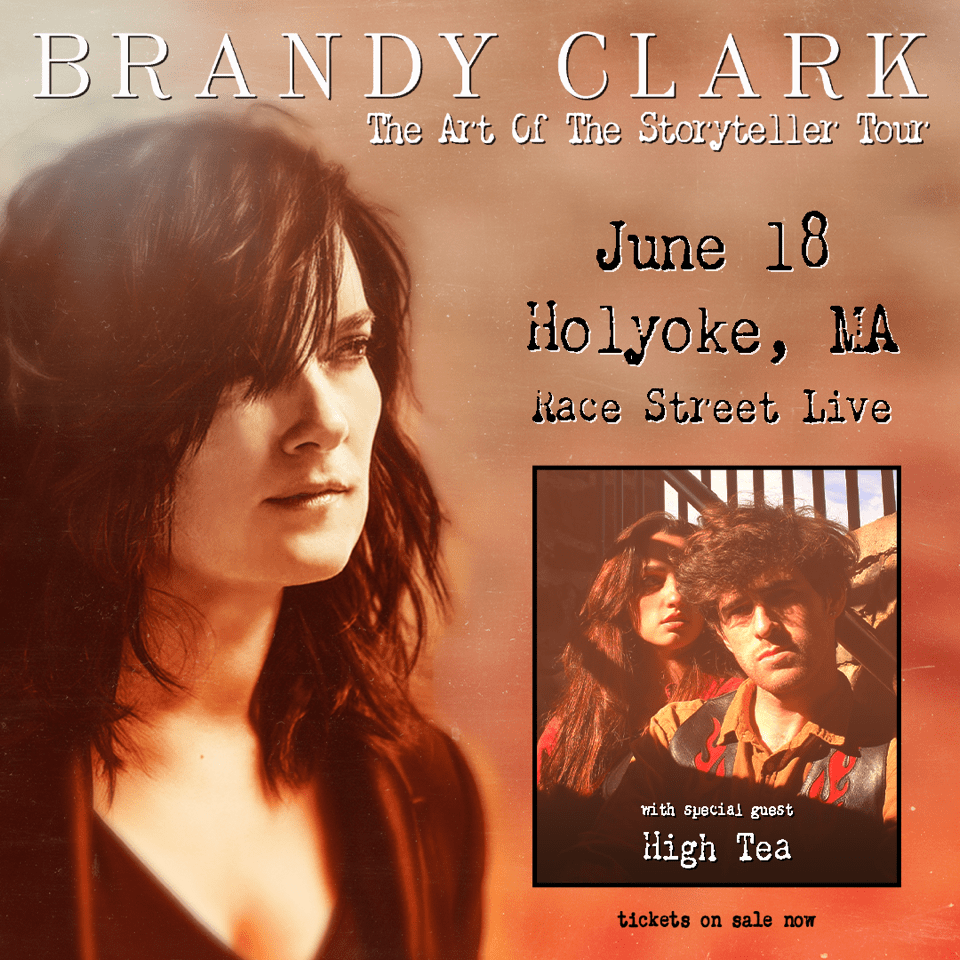
Brandy Clark, a ten time Grammy nominated country singer, talks with me about the Art of the Story Song. We start (abruptly) with her answer to my question if writing that style of song is more satisfying and comes to her more naturally. Our topics include how autobiographical her songs tend to be or how fictional. Brandy Clark talks about her songwriting process and what techniques she uses to inspire her writing if she’s hit a block. She also shares a songwriting prompt which gets her in the right frame of mind; she imagines the “furniture in the room” which for her, is often a kitchen. Once she can set the scene and imagery that way, the characters walk in and out of that “room” in her song.
I asked Brandy Clark about the experience of “songwriting for others on the clock” for ten years before she began performing her own songs. This disciplined approach has helped her in establishing a routine and a structure to encourage her writing instead of “waiting for inspiration.” We finish the segment with Brandy’s commentary on Pride Month and the impact of being “out” for many years in the music business. She also talks about her mentoring in this area with others in the music scene.
We finish the segment with two songs one from her newest release, “Your Life is a Record”, which is a duet with Brandi Carlile called “Same Devil” and finish from her debut album “12 Stories” with a beautiful song called “Hold My Hand”.
Catch Brandy Clark, along with Valley duo High Tea, at Holyoke’s Race Street Live this coming Saturday 6/18!!
I had the pleasure of interviewing Jack Casady, bass player for the Jefferson Airplane and Hot Tuna, in advance of his acoustic set at Northampton’s Academy of Music on 4/28. Our conversation was plagued by some technical difficulties. We were using zoom over a tour buses sketchy wifi while traveling in a remote area on the way to Texas for a show. This situation made the audio difficult to use for radio but the chat was funny and informative so I will attempt a transcript below. Prior to getting started, Jack noted the huge amount of CD’s in our station’s collection. He showed me via zoom the large vinyl collection they have on the tour bus. He also mischievously showed me the sleeping compartment of Jorma catching a nap. Jokes about being over 80 commenced! Jack in a playful mood asked if I wanted his laptop to show his face horizontal or vertical! Zoom, indeed. As another aside, Jack reminds me that Jorma’s birthday will be celebrated at their NYC show at Carnegie Hall where the band will play the album, “Burgers”, itself celebrating 50 years since it’s release. Jack also will be turning 78 in mid April too.
Jack, Welcome to NineVolt Heart. Can we go back to the early days of your collaboration with Jorma Kaukenan? Tell us about the Triumphs?
JC: You know, Ed, when you’re young and I was 14 I had met Jorma (then called Jerry) through my older brother Charles Casady. We all loved music, we all had record collections. We would all go back to our homes which was right near the High School (in Washington DC), it was walking distance. Nobody took the bus. Anyway, we started hanging out and he played guitar, I played guitar and as I pointed out before, in normal times our age difference would have meant we couldn’t be friends. Back then, I was in Junior High while Jorma was finishing up High School. We probably wouldn’t have been buddies because the age gap would’ve been more severe at our younger years. Now, it isn’t an issue. We discovered our mutual interests around music and we both played together. One of our girlfriends at the time got us a gig playing a party in the basement. I think we got paid $6 which was big money and that started our career pretty much in earnest. We played a bunch in that year (Jorma’s last year of high school) we played all over DC where there were a whole series of bars that featured music, places you could play and not tell your parents what you were doing.
NVH: You might not have been old enough to even enter these places?
JC: No, I was fourteen at the time. You needed to be eighteen to play in these clubs! I believe I took my older brothers draft card (he had turned eighteen) and we went to Jorma’s house. His grandfather had a mimeograph machine, hand cranked. It would only print on one side. The draft card was just a plain white piece of paper, white with the form on the top, a form card. There was something new happening at the time. It was called lamination. I put this all together and that’s how I got into all these clubs for our gigs. But, of course, I have pictures of what I looked like then…I looked fourteen!
NVH: Ingenuity, at it’s best. Tell me about the Washington DC scene for music at this time. You had lots of clubs with jazz and some with bluegrass…
JC: It was fantastic! First of all, let me start at the top. You had the Library of Congress! I used to go down there early on, when I really started to get interested in a lot of folk music. I studied a lot of folk music including English and Irish ballads. I’d go to this facility and go to the music section. I’d pull out all these old records. You go into this little booth and listen to these ’78RPM records. Also, at our fingertips, I’d have access to all these great record stores like Waxy Maxy’s Record store, they had all the new singles. I started collecting all these old ’78s, now they were 45RPM, the great R&B singles, the blues singles. Those blues guys released all these great singles, the Chicago blues guys did. My older brother and I collected this kind of music. At the same time, all the clubs in Washington had all this music playing live. In the late 50’s early 60’s it was the beginning of the jazz revolution with the chance to see Charlie Mingus who I saw many times. Also Wes Montgomery, Ornette Coleman, Yusef Lateef, Roland Kirk, Eric Dolphy; all these jazz greats. It was an incredible opportunity. I’d go to the Howard Theater for a dollar fifty and see Ray Charles, Bobby Blue Bland, Jackie Wilson, Hank Ballard and the Midnighters. It was just great music. I had a couple of buddies of mine who all were going to Antioch for college (including Jorma where he learned his finger picking style). I had a good buddy Ronnie McDonald, drummer and singer, that we formed a band with just before Jorma went off to college. Ronnie and I would go to all of these clubs around Washington DC, they were primarily African American clubs, you know, and there’d be two teenage white guys walking in. But it was great opportunity on so many levels. In Washington DC a label was just rediscovering Mississippi John Hurt and that sound. Whereas, Jorma was getting into the music of Reverend Gary Davis out in Ohio (at Antioch). At sixteen I got a work furlough working at NYC, we would go up to Gerdes Folk City where we’d get a chance to see all these folk and blues guys like Reverend Gary Davis and Dave Van Ronk. It was the beginnings of a “blues revolution” on all these college campuses and folkies like Bob Dylan just beginning.
NVH: That must’ve been a pretty incredible experience; a musical education as well. When Jorma went to Antioch, you continued to play music in the DC area.?
JC: Well, he was going to college, remember I was still in high school preparing for college. Our musical career hadn’t been foretold. Our parents on both sides expected us to go to college and get a real job.
NVH: Like a dentist, like your Dad?
JC: My father was a dentist, his brother was a Doctor. My mother’s father and brother were in Civil Engineering.
NVH: I was curious about the conversation between you and Jorma when he invited you to join the Jefferson Airplane? He had gotten himself into this electric band and you were kind of skeptical (Jerry the purist!)
JC: He left as Jerry the flat picking strummer and he returned as Jorma the finger picking stylist! Earlier we would be doing these things like Buddy Holly songs, Johnny Cash but he came back as “a classical guitarist” playing melody with really interesting chord changes and singing folk blues. He was many steps away from where he was as a kid. When Jorma went to college, I was in a rhythm and blues band, this band was playing in adult clubs. This was before the british invasion thing happened. I had stepped into the adult world musically, we played Ray Charles stuff, R&B stuff like Bobby Blue Bland played and later on Kingston Trio and that kind of stuff. At this point, I was playing professionally in these clubs while I was still in high school. At that time I was working like five nights a week, getting home at like two thirty at night and then getting up to go to school at 8AM. In the last year of high school, I had this great situation, one of my teachers knew what I was doing. He said “You know Jack, I got a solution. If you join the school band, that class won’t start until 10:30AM”. The problem was the school band didn’t need a guitarist, so I had to take up the Trombone! I tried to blast my way through that but I was really atrocious. My band music teacher shook his head and said I couldn’t play and march at the same time. But he knew what I was doing and he took pity on me and passed me in the class. I never had to march. In the end I could sleep a little more in the morning coming in at 10:30 instead. It was a fun time.
But in the club work I really learned a lot. Those bands at that time had at least two horns, trumpets or saxaphones. So as a result, you learned a lot of these arrangements for big band in the late forties. Things had not got syncopated yet, so most of the stuff the bass players were doing was “walking basslines and stuff” almost always played on stand up bass. Jack tells about playing four sets a night of music a day for a couple of weeks and it paid $115!! He describes the plaid tuxedos and the whole scene. It was an adult scene, kind of like a LasVegas atmosphere. This was all pre-Beatles. It’s when I really got my chops on bass guitar. Our band leader said we’ve got this bass player, but he’s not working out. He doesn’t have a feel for this music. Would you consider playing bass.?? How hard could it be? I’ll give you fifty bucks! I said ‘You’re On”. I did the gig and I fell in love with the instrument. I think in retrospect, I could’ve made an OK guitar player but I think I made a pretty good bass player.
NVH: Bass Player Magazine agrees, Jack. They’ve awarded you a Life Time Achievement Award!!
JC: I just liked the register. When I think back about it, there was lot of classical music in Washington DC. I went to see a lot of ballets and I always loved the low end section. It just “said” something special. That Summer of 1960, Fender had just come out with the Fender Jazz bass that Summer. I had a couple of businesses going on; lawn cutting businesses in the neighborhood, I sold the “Evening Star” newspaper, so I saved up along with money I made in clubs. I remember that bass cost $270 which was a really expensive instrument at the time. The first bass I owned 1958 Telecaster was $115. I wish I kept that. The Fender I ended up purchasing had two pickups, I like that because it had more tone. I started approaching the instrument with two fingers on the right hand, it just felt really natural to me.
NVH: This entire time Jorma didn’t know you were playing bass. Or maybe He didn’t believe you! Did you feel when he asked you to join the Airplane that you were ready?
JC: We were young kids. But I had been playing professionally for some time. He asked me in 1965 and I’d been playing bass since 1960 and music for much longer than that. Don’t forget, when I joined that band out there (The early genesis of Jefferson Airplane), they were not professional musicians. As I’ve said before, if you were putting a band together, those players would not have come to mind. Paul Kantner came out of the folk twelve string scene, he was a strummer raised in the Weavers vocal tradition. Marty Balin was a pop singer who then got into folk groups like Peter, Paul and Mary. Jorma came out of the nitty gritty blues scene. Even Grace Slick came out her folk work in the Great Society. So when I came out to San Francisco to join the band, I had the most professional experience among all of them because I had worked steadily in that environment.
AFTER A Lost CONNECTION….Jack resumes. In Washington, I had lots of mutual friends who were in the Appalachian folk music as well as folks like Pete Seeger. I was very interested in that musical connection as well what I was doing playing my night time gig playing other people’s music. It was around this time in 1965 that I re-enrolled in college in the Fall because the Viet Nam war was gaining some steam and every young man had a draft card. You either went to school or you got drafted. So I was talking with Jorma and he said ,”you wouldn’t believe what I just did. I just joined this group, this folk rock group called the Jefferson Airplane.” And I laughed, “You, the purist! in a folk rock group!” That had just started to be a concept at that time. Dylan had gone electric and bands like the Lovin’ Spoonful were beginning to appear. This was a time of unrest and lots of African American riots and unrest, there was a lot of rebellion, all this was going on at the same time. Young people like Bob Dylan started writing about what was going on right around them. This was really becoming a way for artists to express themselves.
So Jorma says, “Hey Listen, we need a bass player here, what are you doing?” I said, “I’m in school, staying out of the Army, and playing a lot of bass. I don’t think he had remembered at this point that I’d been playing bass since I was sixteen. We hadn’t physically played together in that way with him as a guitarist and me as a bass player.” He said,” Listen, we got a manager who promises he’ll pay us $50 bucks a week whether we work or not! Why don’t you come out.” I said,” You’re On!” In any case, I flew out on the first plane I’d ever taken. Jorma picked me up at the airport and he looked at me and said,” You Better Be Able To Play the Bass”. I guess that worked out.
NVH: Sometimes a Jefferson Airplane set included an acoustic set with just you two. Was that the beginning of what you might have envisioned the Hot Tuna experience?
JC: I mean we always played that way when we got a chance. But let me back up a bit and tell you about the recording industry at that time. The tradition was a record company would hire a singer or a group of singers, they would hire someone to write a song, the singers would do the song, then they would hire players to record the instruments in a studio. Then, they would hire someone to go out and do that track live. At this time there was nobody who was writing their own music to record themselves. Even the Beach Boys didn’t play on all their songs, on some tracks it was studio musicians like Hal Blaine and Kenny Rodgers and all kinds of folks. But for the bands in San Francisco, they would die to have someone else play their guitar parts. With that in mind, once we gained some steam in the studio after we had a hit with “Surrealistic Pillow” we were able to call our shots in the studio at that point. Even with that recording, we approached it to let each song stand on it’s own, we didn’t go in to the studio with any pre-set idea that we would play it acoustic or a duo. This was happening with folks like the Beatles as well. They were moving from a rather strict studio experience to a different sound and even presentation that suited them better. We would spend weeks in the studio to try to capture that experience. Not a collection of singles but the album was a concept in itself. This was really a departure at the time. With that in mind, as we started to go through all the recordings trying to find enough material for the album, maybe five or six songs on a side. Jorma had played so brilliantly on “Embryonic Journey” just really sparkling. We all looked at each other and said, “Why Not”. It wasn’t like we had a discussion like that’s Great or that sounds fine. We didn’t sit down for like a half hour and hashed out whether or not it was going to be on the album. It just was. Some many years go by and so much stuff gets written, people want to know our conceptual thought process was, agonizing over something. At times we might fight over chord changes or something like that, but Jefferson Airplane, at it’s best ,we worked really well together and inspired us in the studio. The band had it’s moments and it’s run of over seven years. I think the strength of the Airplane was that despite some drastic differences over music, we all got along. We were still young and that’s why in the 70’s, 1972 or so, Jorma and I really wanted to concentrate on the direction of the kind of music we wanted to do together. It really wouldn’t fit in the format of the Jefferson Airplane. Marty was writing a lot and Paul too. It ended up being like a lot of groups with a lot of talent, that everyone would get like two songs on an album or something like that. But, in the beginning it was all organic how it all came together, that’s why it worked, that was the strength. Of course, the weakness was that everyone was still growing and wanted to try out new stuff. It all follows a course, like a river, the river flows.
NVH: When you and Jorma play as a duo, Is there something about his style, especially his finger picking style, that allows you to be more creative as a bass player?
JC: Oh, absolutely! We just had so much fun these last week of shows. It’s really something special for me, as a musician. Jorma composes on the guitar like a pianist at two ends. His thumb is like the left hand and he can move with contrapuntal bass lines moving up and down and his first two fingers with the melody; so it’s complete music. Jorma doesn’t need me to play this music. So my challenge is, as a bass player is mostly I think about it as an orchestral arrangement of how to bring this music together. Sometimes we’re playing stuff together, sometimes it’s working in a contrapuntal manner, sometimes it’s working inside and outside the melody. I work with phrasing a lot. That’s one thing I’ve always done with all my bands. I want to support the vocal anyway possible; not just with a drone bass but also with the phrasing, the meaning of the lyrics and all that stuff. So, it’s a great challenge for me to add something that makes us “Hot Tuna”. It’s also fun for me to figure out how to play, in the beginning, in the folk tradition like Reverend Gary Davis and others who are usually solo finger picking guitar works. How to incorporate my bass parts into that, I was approaching that as I would a piano. So, how to keep that music lively and nimble but not so anchored down in a rhythmic fashion. That kind of music is a real challenge for me. For me as a bass player, the music Jorma plays makes it possible for us to have a show each night that’s thoroughly exciting and fun to play. We’re playing stuff we’ve never heard before. That’s why every night, I’ve been asked you guys have been playing 66 years together, do you get bored. The answer is; Absolutely Not!
NVH: Jorma say’s you never play the same thing twice!
JC: That’s his way of complementing my playing my desire to channel a little “Eric Dolphy” into my playing. I try not to fall into the trap of “bettering yourself”; you play something tonight and then you don’t want to repeat it. I have to remind myself that every night is different. It’s not just trying to play different notes but tapping into different atmospheres. It’s more about, “how do I hear the music tonight.? How do I hear the melody in these sections tonight where I’m allowed to “set the stage” in a certain direction.?
NVH: Well Jack Casady, I want to thank you for your generosity and we are all looking forward to your duo show at the Academy of Music in Northampton on Thursday 4/28.
Grammy nominated songwriter Rick Lang joined me on NineVoltHeart to tell some stories; tales from his upcoming Dark Shadows Recording’s release. “A Tale to Tell” has thirteen of these story songs featuring thirteen vocalists and a slew of Nashville’s best players as well. We start the segment off with “Lost Town” a song which chronicles the Town of Dana Massachusetts and it’s fate to be one of four small towns sacrificed to the establishment of the Quabbin Reservoir. James Kee from East NashGrass does a super vocal on this cut to set the tone for our interview.
Rick Lang is a modest guy who needed to be prompted to acknowledge his many awards and accomplishments but he is glad to discuss the mentoring of other songwriters. As an isolated songwriter in New Hampshire, he really valued input and help in creating his early songs. In turn, Rick has provided this kind of mentoring to dozens of emerging songwriters. He has been active in the International Bluegrass Music Association’s Songwriting Committee as well as collaborating with Eastern Tennessee State’s music Program. A scholarship in his name has been endowed to help young songwriters in need.
Rick’s long standing songwriting work has tended to be in Bluegrass Gospel songs, his “Gonna Sing, Gonna Shout” album was nominated for a Grammy as well as IBMA Album of the Year. “A Tale To Tell” collects a batch of “story songs’ that hadn’t thematically fit in those earlier releases. All the songs are true stories of real life experiences such as the forementioned “Lost Town”. We talk about the stories behind a few other songs such as “They Sawed Up a Storm” and “Toodleoo”.
Rick has become prolific in the creative collaborative process of co-writing. He tells the anxiety of his first co-write with Donna Ullise and Jerry Salley. Well, he’s gotten over those jitters because he’s written hundreds of songs since; many picked up by other artists to much success. We talk about his recent co-writing experience with Dark Shadows labelmate, Rick Faris, for his sophomore album, “The Next Mountain”. ‘Rick Squared’ as he refers to the collaboration, co-wrote five songs on this release! We listen to the gospel burner that features Sam Bush and Jason Carter among others, called “See You On the Other Side”. The musical set finishes with “They Sawed Up A Storm” and “Toodleoo”. I’ll let Rick tell those stories, listen in. You’ll enjoy the Tales, for sure.
Koady Chaisson, heart and soul of the East Pointers, has passed at the age of 37. The multi-instrumentalist touched many people’s lives through his music surely, but just as much by his personality too. His kindness and generosity has been well documented by posts from friends, family and fans from around the world. My sincerest condolences to his extended family and his wife Chloe Goodyear. The segment includes four tunes representative of the band’s sound which bridged modern beats with traditional celtic and folk music. I’ve included reminiscences of my own and others throughout.
The segment begins with “Wintergreen” which was the musical soundtrack of many fans who tuned in nightly for the band’s reading of Anne of Green Gables, another PEI icon. My wife and I attended livestreams for all of the first three books, which helped hundreds get through the toughest, loneliest, most uncertain times of our lives. A new community was born thanks to the band’s creative endeavors, a theme which is likely repeated over and over. Annedemics united over the goofy to heartfelt, bonding over the characters of the books but just as assuredly with the guys in the band.
“Tanglewood” follows, which to me, solidifies their “sound” both traditional and modern led by Koady’s percussive lead banjo riffs. I also relate the first time that I met Tim and Koady during a visit to my radio station at the time, WMUA. Louise Dunphey’s Celtic Crossings program and mine were back to back and we would often have guests. That night, these two incredibly charismatic young men played live in the studio having a great time and stamping the memory in my mind forever.
The segment includes “Before My Time” and “If You’re Still In, I’m In” both from “Yours to Break” their 2019 release. A note is given for Koady’s favorite charity called the Unison Fund which helps musicians dealing with things like mental health issues. A GoFundMe campaign has raised thousands in his honor for this effort that was so special to him.
We are heartbroken for our loss, we grieve for the families, but today, we celebrate musically the great spirit of the young man from Souris PEI, Koady Chaisson.






 Nine Volt Heart